What causes this change?
Normally people below the age of about 45 can adjust the focus of their eyes between long and short distance at will. However, in very dark conditions this system breaks down and the focus of the eyes settles to a constant distance of about 1 metre.
But surely this means that special glasses are required for night driving?
Yes, that is logical reasoning and it is true that, if a driver's eyes were constantly focused at 1 metre, the distant road ahead and on-coming traffic would appear blurred. Fortunately, however, we do not suffer this fixed focus. Modern road and vehicle lighting provides sufficient light for the focusing system of the eye to work normally: even when there is no overhead street lighting.
Even so things do look a little blurred when I drive at night!
Road lighting levels at night are obviously lower than those found by day. This causes the pupil of the eye to become larger during night driving than under brighter conditions and the increase in pupil size can accentuate any existing small errors in focusing, causing a blur. If you notice such a blur, your current spectacles or contact lenses may need changing or you may need an optical correction. Your optometrist can advise you on this.
I've had my spectacles checked but I notice haloes and reflections around lights and headlights make my eyes feel uncomfortable. What can I do about this?
The most common reason for haloes and reflections is a dirty windscreen (both inside and out). In the same way scratched or dirty spectacles can contribute to unwanted scattered light; so can condensation on any of these surfaces. It is a good idea to always clean your windscreen and spectacles before night driving. Reflections from the surfaces of spectacle lenses can sometimes cause multiple images of lights at night. If you notice these, effective anti-reflection lens coatings are available. Ask your optometrist for details.
Is it just part and parcel of growing old?
Unfortunately a variety of changes in the eye can contribute to discomfort from glare during night driving, particularly among older drivers. This is commonly caused by cataracts which produce effects similar to looking through a dirty window. Spectacles can do nothing to overcome this and it may be sensible to minimise night driving. If you are affected by oncoming headlights, try concentrating on the nearside kerb as you drive - but don't forget to reduce your speed!
I've seen amber night driving spectacles advertised in the press. Can they help?
There is no evidence that these lenses improve vision on the road, indeed tinted lenses may actually make vision worse. Windscreen tints have the same effect and this is why the Highway Code warns drivers not to use any form of tint at night.
What about the blue night driving lights advertised for use within the car?
These cause the eye pupil to contract and may therefore reduce the glare from approaching headlights but they also make it harder to see the road ahead. They are not recommended.
What should I do to make sure that I can see as well as possible when driving at night?
Make sure that your eyes are examined regularly.
Always wear an up-to-date pair of distance spectacles or contact lenses.
Keep a spare pair in the car if possible.
Do not use tinted lenses but have them anti-reflection coated if necessary.
Don't forget to keep the windscreen clean, inside and out, at all times.
Make sure your car's lighting is working properly.
Finally, if in doubt about the fitness of your vision for driving at night, seek your optometrist's advice.
Information produced by the College of Optometrists in conjunction with the Association of Optometrists
Night vision
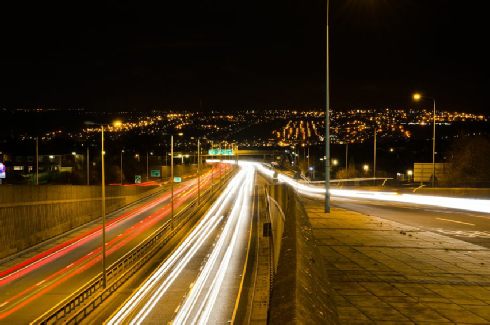
Most of us are aware that driving at night is more demanding and stressful than driving in the daytime. We make natural compensations for this as we drive but it is a fact that the number of night and road accidents is much greater than those that occur during the day.
Some blame "night myopia" and advocate special night driving spectacles but optometrists know that this is not true.
What is night myopia?
Myopia is what is generally known as short sight. People with it can see near objects clearly while distant objects are blurred. It is a problem that occurs in all conditions and light levels but recent research has shown that, at very low light levels, well below those experienced when driving at night with headlights on, younger people with otherwise perfect vision become temporarily myopic.